Vision
A place where anyone can explore the ocean.
All documents and pictures of the plan: Documents
Purpose
Understand, appreciate, explore.
Help people understand and enjoy Earth's oceans, the seafloor, marine life and underwater technology, and eventually the ocean worlds beyond Earth, with scientific accuracy, accessible education, conservation and the joy of discovery.
Curiosity
Start from questions people actually ask: how deep, how do we know, what lives there, how do robots get there.
Accuracy
Every figure links to its source, and the Research page lists each source's date (or says it is undated). We say whether a depth was measured, predicted, filled in by computer or actually seen, and we never invent discoveries.
Access
Free or low-cost wherever possible, sponsored school visits, step-free design, quiet rooms and sensory-friendly hours. See how others do it, below.
Conservation
Use less, waste less, and connect visitors with the people already caring for our rivers and the ocean.
Community
To be built with South Bethlehem and the wider Valley: educators, scientists, families, students and existing institutions.
People and the planet
For people, and careful with the planet.
Everything here is planned for the people who come and for the water and wildlife beyond the door. These are the plan's own commitments; nothing is built yet.
Our long-term aim is a future where money matters much less, and what counts is people and the work they do together. It is an aim, not a promise. For now money is a tool: work that should be paid would be paid, and volunteers would add to paid staff, never replace them.
- Proposed
Who it helps
Schools, families, future engineers and scientists, curious adults, and anyone who needs a calm space or step-free access. Free or low-cost access is the aim.
- Proposed
What it protects
Rivers, the ocean and the life in them. No live animals on display and nothing taken from the wild, no bottled water or single-use giveaways, and rainwater reused where the building allows.
- Proposed
Sort, recycle, compost
Sorting points for recycling, compost and trash at the center, the play area and every program or event. Food and garden waste is composted, and good leftover food is saved in the food and water hub.
- Proposed
Reuse first
An existing building reused and adapted, with its materials salvaged and reused where they can be, and natural energy such as rooftop solar where the owner agrees and the roof allows.
Who it is for
Everyone, on purpose.
- School groups and teachers, from early years to high school
- Families and children, including the very young
- Students who might become engineers, scientists or explorers
- Adults who are simply curious, at evening talks and on weekends
- People who need a calm space or step-free access
- Visitors who come for festivals and stay to learn something
What it will not do
Promises we can keep now.
- Sell tickets, take donations for construction or announce an opening date before governance, a site and permits are in place
- Capture rare or deep-sea animals for display
- Show invented observations, species records, footage or discoveries
- Claim a partnership, endorsement or license that does not exist in writing
- Assume donated land, machinery, materials or services
- Claim the building would be energy-independent without engineering evidence
Access
Cost should not decide who gets to learn.
Access is planned from the start, not added later. Below are models already used elsewhere and the rules that would apply.
None of this exists yet: no prices, passes, school programs, volunteer roles, funders or access partners have been agreed or contacted.
- Verified Said by a primary source: a government record, the owner's or operator's own site, or an agency document.
- Reported Said by credible news or a secondary source; not yet confirmed in a primary record.
- Proposed Our proposal or our own estimate. Not yet confirmed, and nobody else has agreed to it.
- Unknown Not found in public sources. Only the owner or agency can answer.
Low-cost admission
VerifiedUnder Museums for All, participating museums charge people showing an EBT card from nothing to $5 each, for up to four people per card.Source: Museums for All 1 (About Museums for All, 2026), About Museums for All (2026)Source: Museums for All 2 (Museum FAQs, undated), Museum FAQs (undated)
Library museum passes
VerifiedThe Bethlehem Area and Easton Area public libraries lend museum passes to adult cardholders, and Allentown Public Library's passes include one for the Da Vinci Science Center.Source: BAPL (Museum Passes Free With Your Library Card, 9 February 2026), Museum Passes Free With Your Library Card (9 February 2026)Source: Easton Library (Museum Passes, undated), Museum Passes (undated)Source: Allentown Library (Museum Passes, undated), Museum Passes (undated)
School trips
VerifiedPennsylvania's Educational Improvement Tax Credit lets businesses fund education programs on the state's list, and some education nonprofits use it to pay for school trips, buses included.Source: PA DCED (Educational Improvement Tax Credit Program (EITC), undated), Educational Improvement Tax Credit Program (EITC) (undated)Source: Tyler Arboretum (PA Educational Improvement Tax Credit (EITC) Program at Tyler, undated), PA Educational Improvement Tax Credit (EITC) Program at Tyler (undated)Source: Stroud Center (Educational Improvement Tax Credit, undated), Educational Improvement Tax Credit (undated)
By bus
ProposedThe planned area is around LANta's Southside Station, so visitors and school groups could arrive by bus, with a step-free route from the stop. Any new stop or shelter would be LANta's and the City's decision.Source: LANta (Enhanced Bus Service (EBS), undated), Enhanced Bus Service (EBS) (undated)
Pets where it is safe
ProposedService animals would be welcome everywhere visitors go. Pets on a leash would be welcome on the outdoor grounds where it is safe for them and for visitors, but not inside the play area.
Short volunteer shifts
ProposedVolunteer shifts would last 2 hours at most, and the work would be outdoors where it can be.
Volunteers
VerifiedPennsylvania requires child-protection clearances before an adult volunteers with children, renewed at least every 60 months. Federal rules generally do not let volunteers work in a nonprofit's shop or other commercial activities.Source: PA DHS 1 (Volunteers having contact with children: frequently asked questions, 23 August 2024), Volunteers having contact with children: frequently asked questions (23 August 2024)Source: PA DHS 2 (Child abuse clearances, undated), Child abuse clearances (undated)Source: US DOL (Fact Sheet #14A: Non-Profit Organizations and the Fair Labor Standards Act (FLSA), August 2015), Fact Sheet #14A: Non-Profit Organizations and the Fair Labor Standards Act (FLSA) (August 2015)
- Unknown A Lehigh Valley fund for field-trip buses was not found. School district transportation offices, United Way of the Greater Lehigh Valley and local community foundations could answer.
- Unknown School-bus drop-off and step-free routes at a real building are Unknown until a building is chosen. The Bethlehem Parking Authority, LANta, the City and an accessibility consultant could answer.
How it fits
One idea among neighbors.
The center would work alongside museums and watershed groups that already exist, not compete with them. Aethon, a company founded by the person planning the center, is its data and mapping partner: Aethon supplies the maps and data; the center does public education. Aethon does not fund, own, operate or approve the center. No other partner exists. Bethlehem Commons and Bethlehem Connect are separate proposed projects, not existing ones. They could connect with the center one day. The shared campus would be with a different plan, the Bethlehem Nature & Science Center, by the same person.
Watershed education is already strong locally. Wildlands Conservancy says its environmental education programs benefit more than 19,000 school-age children a year; the figure is its own and undated.Source: Wildlands (Environmental education, undated), Environmental education (undated) The center would connect people to that work, not duplicate it.
Ocean Discovery Center (planning phase)
Linked to each group below. Aethon is the agreed data and mapping partner. No agreement or formal relationship exists with any of the others.
Aethon Agreed partner
Data and mapping partner agreed 19 Oct 2026
Existing museums Exists
NMIH, Nurture Nature Center, Da Vinci: possible collaborators
Watershed groups Exists
Wildlands, Lehigh Gap, Jacobsburg: run programs today
Nature & Science Center Proposed
Separate plan, same person; would share a lobby
Bethlehem Commons Proposed
Separate proposed project (not an existing one)
Transit Proposed
LANta buses today; Bethlehem Connect and rail: proposed
Here, and elsewhere
Public education here. Marine operations elsewhere.
The center is for exhibitions, classes and outreach. It would not run boats, field missions or a port. That work belongs to other places, most of which already exist.
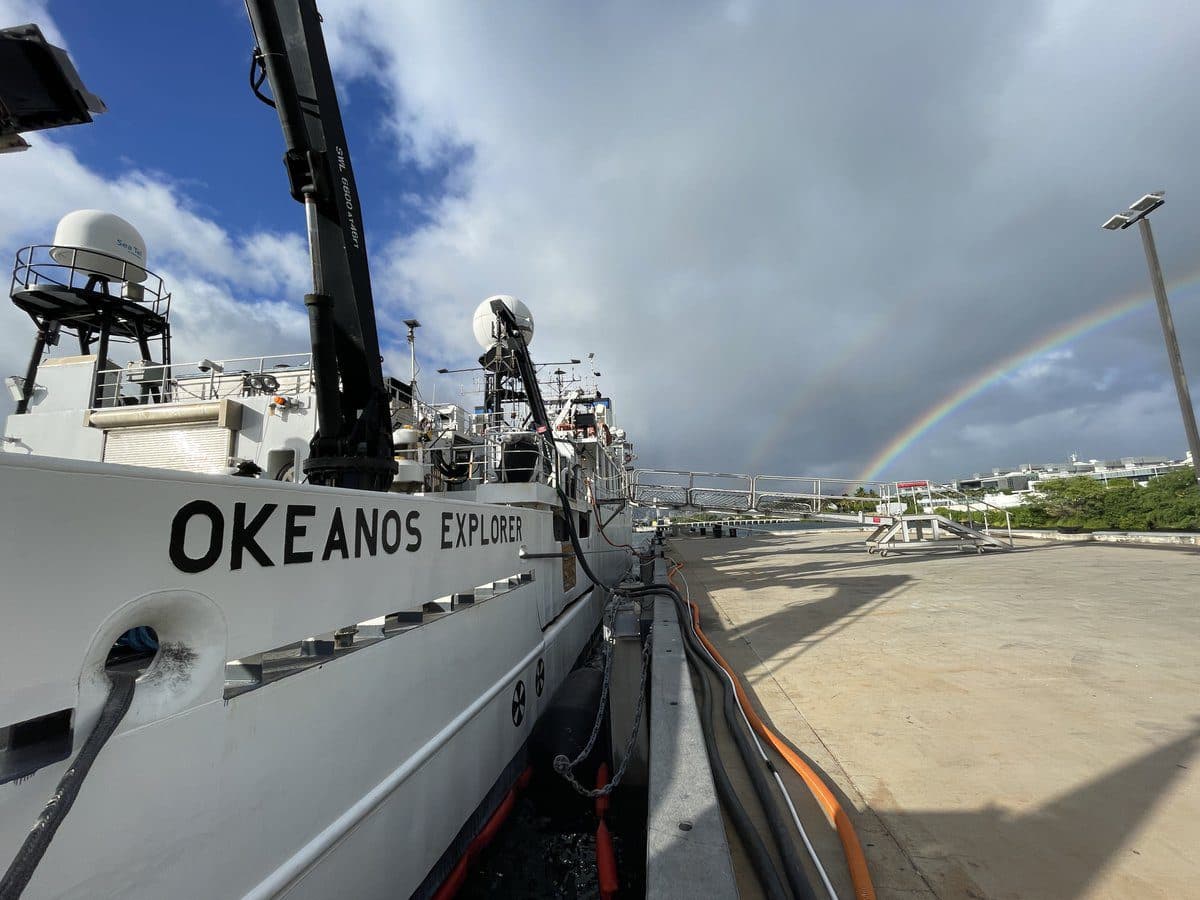
Ocean Discovery Center (this project)
Proposed- Exhibitions and educational programs
- Interactive seafloor maps and data from Aethon, the data and mapping partner, each credited
- Ocean robotics demonstrations (in a freshwater test tank, once there is a center)
- Public outreach, classes and talks
Planning phase. No marine operations, no vessels, no field missions.
Aethon research and engineering
- Ocean data and seafloor mapping, supplied to the center as its data and mapping partner
- Data analysis and science review
- Equipment development and robotics research
Aethon's own work, separate from the center. Aethon supplies the maps and data; the center does public education. Aethon does not fund, own, operate or approve the center.
Future coastal Aethon bases
Proposed- Vessel access and field missions
- Camera deployments and equipment servicing
- Possibly work with remotely operated vehicles (ROVs, driven from a ship through a cable) and autonomous underwater vehicles (AUVs, which swim on their own)
Only if real operating demand justifies them; they need not be commercial seaports.
Planned seaport links
Proposed- Vessel and underwater-robot field work, field trips and data, through existing larger seaports: the Port of Philadelphia, downriver on the Delaware, and the Port of Newark/Elizabeth
Planned links, decided on 19 October 2026 by the person planning the center. No agreement with any port or terminal operator yet, and none has been contacted. Each port's operators decide and set the rules. The center itself runs no boats.
Existing seaports and freight links
Verified- Freight and marine logistics through the ports of Newark/Elizabeth and Philadelphia
- Rail freight through Bethlehem's intermodal terminal
These exist today. The Lehigh Valley Economic Development Corporation (LVEDC) describes easy access from the Lehigh Valley to the ports of Newark and Philadelphia, and an established rail freight terminal in Bethlehem where containers move between trains and trucks.Source: LVEDC (Lehigh Valley's transportation network offers convenient market access for businesses, undated), Lehigh Valley's transportation network offers convenient market access for businesses (undated)
Use existing ports, vessel operators and marine research facilities before building anything new: faster, less wasteful and far cheaper.
Proposed If Aethon builds a coastal and international research network one day, the center could show observations from it, each with its source, date and credit to Aethon, and labeled measured, predicted, filled in or seen.
Reuse it anywhere
Written so another place can copy it.
Another town, campus or country could make its own version. Beyond Bethlehem, the aim is to repeat it in other Pennsylvania towns, across the US, including the Midwest, and around the world. That is an aim, not a plan or a promise: no other place is chosen, and nothing is funded, here or anywhere else.
What another place copies
- The method, the page templates and the checklists
- The core place names kept in one settings file, which a copy edits first
- Templates with no people, contacts or private data
- A copy starts at “idea”, with every permit and agreement “not requested”
What stays local, and is checked there
- Land and owners
- Permits and laws
- Climate
- Language, currency and units
It shares its methods with other planning-phase projects through Project OS, a shared system for people and work that is also in the planning phase. Aethon is its data and mapping partner.